The Republic of Srpska possesses a rich intangible cultural and historical heritage, traditional crafts, practices, and customs that have been preserved for centuries and passed down from generation to generation.
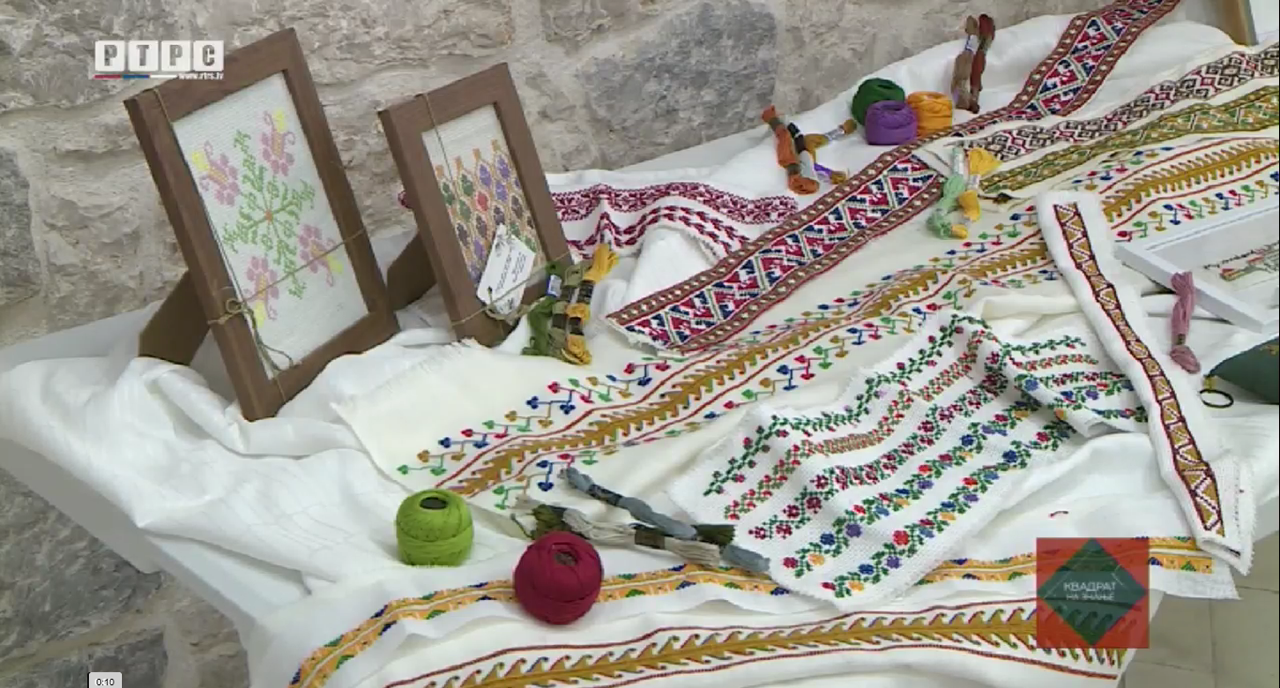
Herzegovina holds a significant place within this mosaic; beyond its traditional products, unique recipes, and specific production methods, it has also preserved a distinct way of crafting garments—most notably through their ornamentation, known as Herzegovinian embroidery.
Trebinje has launched an exemplary initiative, serving as a prime illustration of how a rich heritage can be transmitted to younger generations. The city’s Vasila Women’s Association and Herzegovina Museum launched embroidery workshops and over the course of three years, they have gathered around twenty regular participants—school-aged girls—who have already mastered traditional techniques such as ošvica and pokrstica, and are now creating both garments and decorative items.
The Vasila Association has long recognized the vital importance of preserving traditional crafts and the creation of garments, preserving a national treasure that our great-great-grandmothers, great-grandmothers, and grandmothers embroidered, knitted, and tailored with their own two hands. About twenty years ago, they embarked on this endeavor—somewhat hesitantly at first—and today, they proudly point to their great success.
Herzegovinian embroidery has been saved from oblivion; these diligent little embroideresses hope that, in the future, handmade work will be more highly appreciated and valued, for everything created by hand, needle, and thread is truly original and one-of-a-kind.
Source and photo: RTRS

 EN
 SR
 DE